Clark Huss rooms Map Guide
Map hub for Clark Huss rooms on Roblox — procedural Backrooms halls, navigation basics, and room layout patterns for early access.
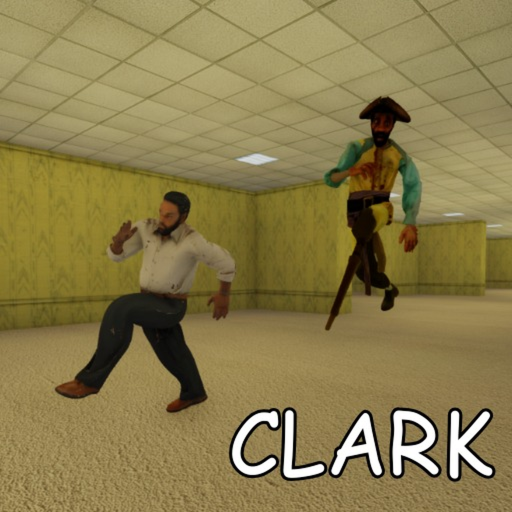
Maps in Clark Huss rooms are not single JPEG overworlds you memorise once. mothem_XD built early access on GMOD Rooms DNA: procedural yellow corridors, humming fluorescents, and junctions that rearrange tension between runs while keeping a recognisable Backrooms vocabulary. That means traditional “here is a marked map image” guides only get you so far — you need layout literacy that transfers across seeds. This hub orients navigation mindset, links deep layout study, and connects map knowledge to entity pressure from Clark and future roster entries on all entities.
What “map” means in Husrooms
When players ask for a Husrooms map, they usually want one of three things:
- Static cartography — a full top-down drawing of every room. Procedural generation makes permanent static maps misleading after patches.
- Layout archetypes — junction types, hall lengths, dead-end tells. This is what survival players actually memorise.
- Entity spawn geography — where Clark patrol intersects common routes. Tied to entity tiers and sound cues.
Our wiki prioritises (2) and (3) with honesty about (1). Detailed archetype breakdown lives on room layouts and sequential unlock flow on level progression.
Video: navigation baseline
Procedural halls reward calm movement over panic sprint. The clip below shows Rooms-style pacing that map literacy builds on.
Pair with level progression for room unlock order context.
Procedural Backrooms halls
Yellow wallpaper, moist carpet palette, and buzzing lights signal Backrooms mythos without copying any single fan wiki image one-to-one. Segments stitch into runs differently each session, but grammar repeats:
- Long axial hallways with limited cover.
- T-junctions forcing left-right decisions under stress.
- Closet niches or side rooms that look safe but dead-end.
- Occasional elevation or stair flourishes depending on patch assets.
Learning grammar beats memorising coordinates. When your squad calls “long hall ahead,” everyone should picture sightlines and sprint rules from strategy tiers without needing a minimap ping.
Navigation without a minimap
Early access may omit traditional minimaps intentionally to preserve horror. Navigate using:
- Left-hand rule — choose consistent wall bias when lost; not optimal but prevents spinning.
- Audio beacons — fluorescent hum and distant entity cues orient better than visual panic.
- Squad chalk talk — assign a lead who verbalises junction types; see multiplayer guide.
- Light discipline — cone management reveals depth; see flashlight batteries.
Map skill is control skill — review PC controls or mobile controls so navigation inputs are subconscious.
Door lock and map psychology
The first door triggers server lock — a map-wide rule more important than any room shape. Psychologically, teams rush after lock-in as if a timer exists even when none displays. That rush causes sprint noise and Clark intersections.
Train calm navigation immediately post-lock. The map is not a race track; it is a pressure chamber described in first run guide.
Landmarks versus random props
Players latch onto distinct props — broken chairs, unique posters, pipe clusters — as mental bookmarks. In procedural systems, some props repeat as tile signatures while others randomise cosmetically. Document recurring signatures on room layouts as community verification grows post-July patch.
Do not assume a landmark guarantees location on the macro map; assume it signals junction class (e.g., “four-way with vending niche”).
Map knowledge and entity tiers
S-tier Clark pressure intersects map literacy at long halls where escape requires forward commitment. A-tier disorientation kills squads who split at identical-looking T-junctions. Studying layouts upgrades B-tier hazards into manageable routine.
Cross-reference survive Clark for route choice when audio suggests pursuit behind.
Multiplayer map callouts
Standardise callout vocabulary to reduce confusion:
- Long / short hall — distance and sprint risk.
- T left / T right — decision point.
- Dead end — reverse immediately.
- Open loop — circular path returning to same junction.
Avoid compass directions unless your squad agrees north is forward spawn facing — Roblox headings confuse more than help in liminal interiors.
What changes when patches land
Early access shutdown updates can retile prop pools, adjust segment length distributions, or add new room modules. Map guides stale faster than codes lists. We update layout pages when:
- Streamers document repeatable new modules.
- Patch notes mention generation changes.
- Community consensus identifies retired tiles.
Static map images disclaimer
Fan-made full maps circulated on social media may look authoritative yet depict single seeds or pre-patch builds. Use them as art, not gospel. Prefer wiki layout vocabulary tied to verification dates.
Study path for new navigators
- Read how to play for Rooms lineage context.
- Study room layouts archetypes.
- Run supervised squad with callout rules from multiplayer.
- Layer entity sound guide to navigate by ear when visuals repeat.
- Review deaths against tier list entities to see map mistakes versus entity mistakes.
Related pages
- Room layouts deep dive — junction types and movement doctrine.
- Players hub — who you meet in the halls.
- Beat entities guide — map choices during encounters.
- Official links — play the authentic build, not reupload clones with wrong geometry.
You cannot download a perfect Husrooms map — you can learn the language its halls speak. Fluency saves more runs than any wallhack promising full ESP of procedurals.
Frequently Asked Questions
Quick answers to the most common questions.
Is there an official Clark Huss rooms map image?
No verified static map covers all procedural seeds. We teach layout archetypes instead of fake full maps.
Do rooms change every run?
Segment order and junctions vary procedurally, but repeating archetypes help navigation.
How do I avoid getting lost?
Use consistent wall rules, squad callouts, and audio cues — see room layouts and multiplayer guides.
Does the map have a minimap?
Early access emphasises disorientation. Do not rely on a minimap that may not exist.
Where does Clark spawn on the map?
Patrol logic is dynamic. Learn audio tells and route discipline rather than fixed spawn coordinates.
Will this hub add images later?
We may add verified tile diagrams after community confirmation post-patch.